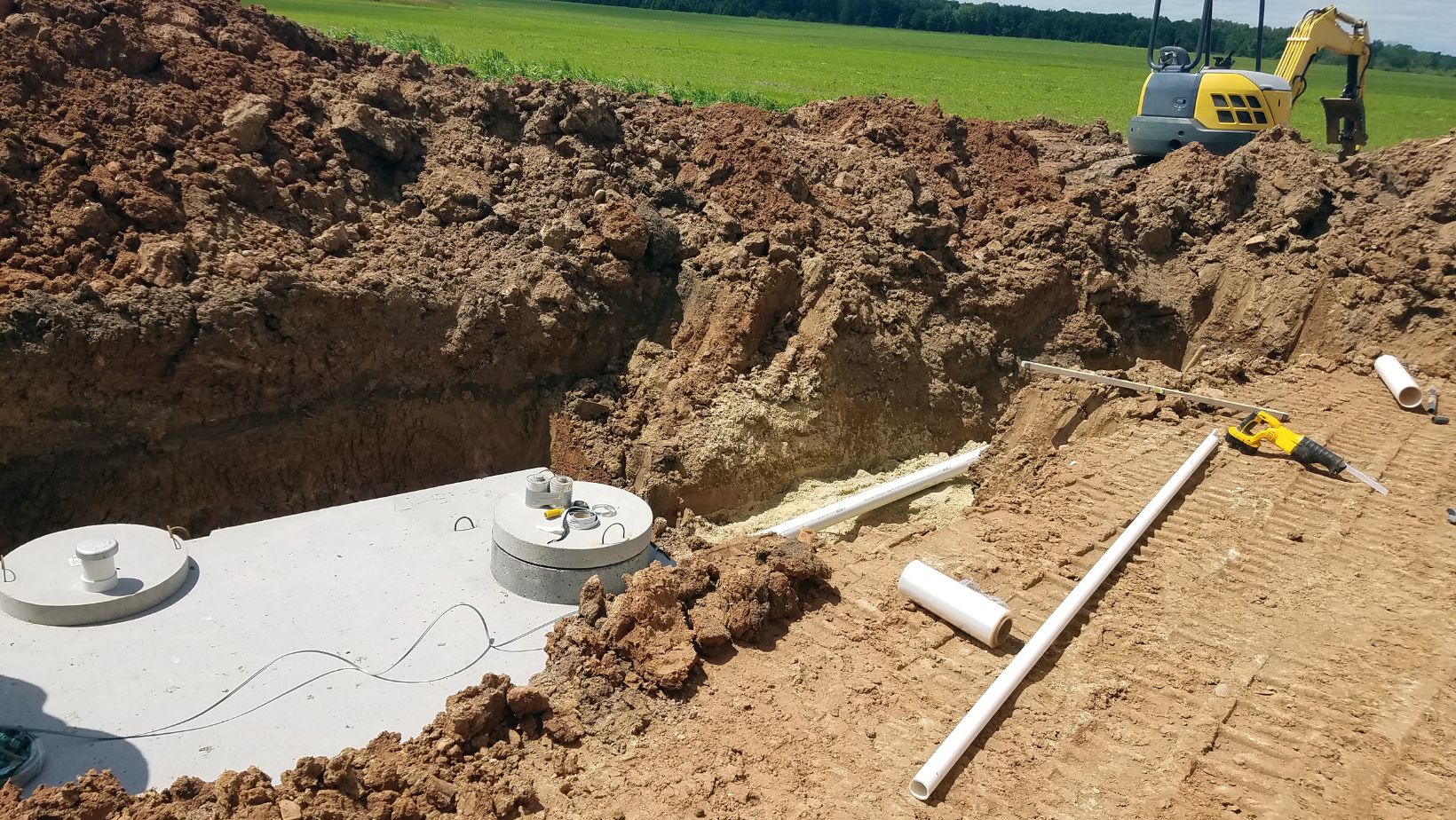
When purchasing a property, one aspect that buyers may overlook is whether the property is connected to mains drainage or operates via a private drainage system. However, understanding the implications of private drainage is crucial, particularly in rural or semi-rural areas where such systems are more common.
How does a private drainage system work?
There are three main types of private drainage systems:
- Septic Tanks
- Sewage Treatment Plants
- Cesspits
All of these systems are designed to store and/or process a property’s wastewater. Depending on the system, the waste may be collected and removed by a professional contractor, discharged into a drainage field, or filtered through a soakaway system.
Purchasing a property with a Septic Tank
The most common off-mains drainage system in the UK is the septic tank. Wastewater exits the property via drainage pipes and enters the tank, where solids settle and begin to break down. Septic tanks are typically made of brick or Glass Reinforced Plastic (GRP), though other materials exist.
From the tank, the wastewater is usually dispersed via:
- A drainage field
- A soakaway system
- (In older systems) A watercourse
It is important to note that discharging directly into a watercourse is no longer permitted under current regulations unless an Environmental Agency permit is in place.
Legal Enquiries and Compliance Checks
If a septic tank is present, your solicitor will typically raise detailed enquiries including:
- Copies of maintenance agreements and recent service invoices
- Confirmation that the system complies with the General Binding Rules (GBRs)
- If non-compliant, a permit from the Environment Agency
- Planning permission for installation (if required)
- Any guarantees or warranties
- Whether the system lies within a Groundwater Protection Zone (SPZ1)
- Confirmation that the drainage field complies with discharge regulations under the GBRs
- Evidence of annual emptying in line with regulatory requirements
- Whether the Environment Agency conducted a habitats assessment before issuing any permit
- A layout plan of the system and information about soakaways and pipework locations
- Estimated daily discharge volume
- Disclosure of any past issues or failures with the system.
Ongoing Responsibilities and Costs
Septic tanks require regular emptying and servicing, usually once or twice per year, to remain functional and compliant. As a homeowner, you will be responsible for these costs.
In some cases, septic tanks are shared with neighbouring properties, in which case a shared maintenance agreement should exist, ensuring all users contribute fairly to maintenance and repair expenses.
Legal Compliance and Risk of Fines
It is critical that the system complies with the General Binding Rules. If it does not, and the system causes pollution, the property owner could face substantial fines.
If documentation from the seller is lacking, it is highly advisable to instruct a competent professional to inspect the system. This inspection can confirm both compliance with regulations and the tank’s condition. If major issues are discovered, the cost to replace a septic tank or build a new drainage field can run into several thousand pounds.
How Pinney Talfourd can help
If you are purchasing a property and wish to discuss the contents of this article further, please feel free to reach out to a member or of our Residential Property team on 01277 211 755 or email .
More information
At Pinney Talfourd, our specialist divorce lawyers are members of Resolution, dealing with many matters using a collaborative approach. We want to help our clients to achieve a fair settlement. If you are considering a divorce and want to find out some more information, please contact a member of our family team to book a free initial consultation.