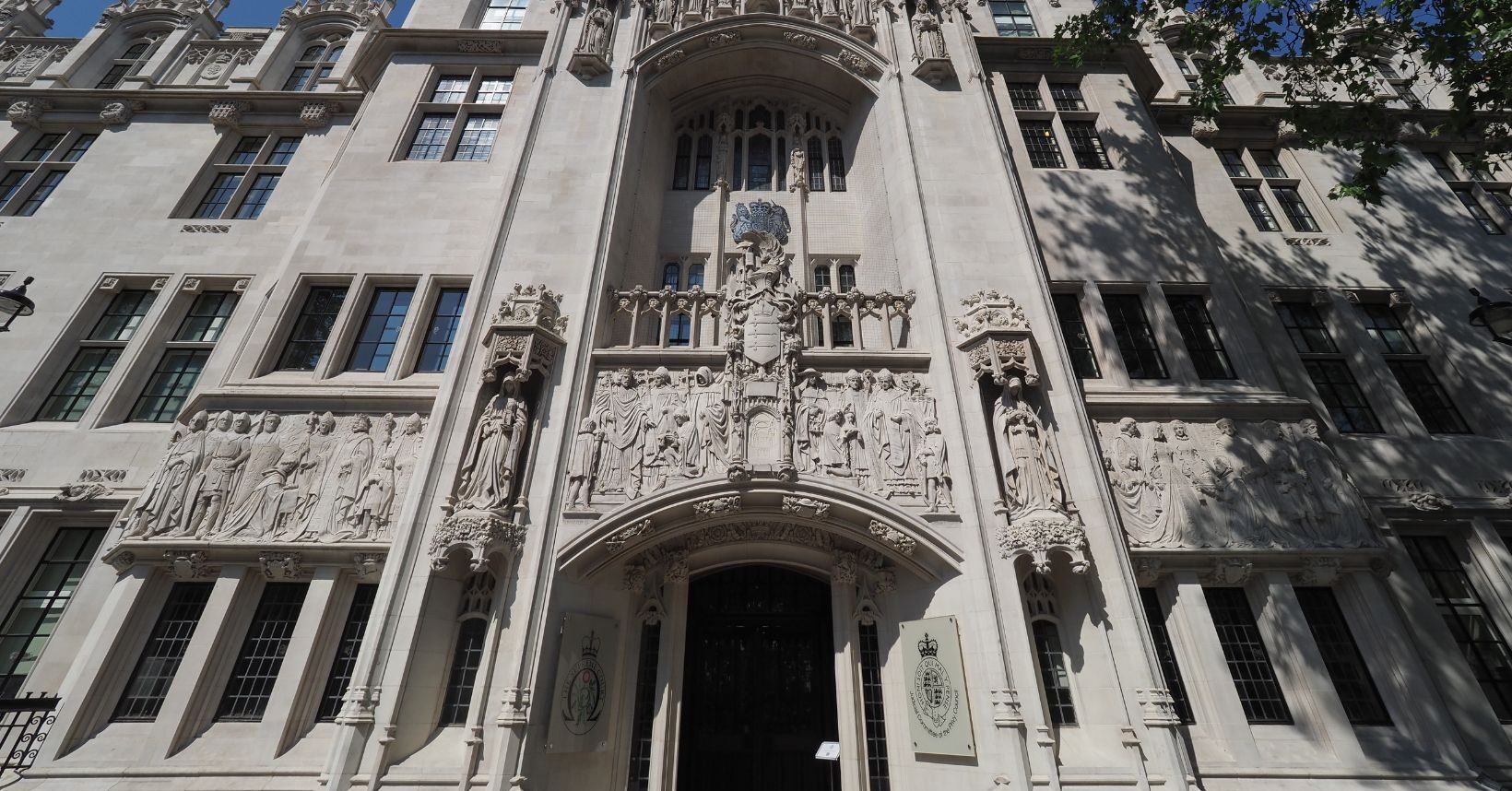
The landmark case which could redefine how we approach the division of assets within a divorce.
The judgment from this hearing will be the first major determination of matrimonial assets from the Supreme court in almost 20 years and shall be a pivotal moment in family law proceedings.
Case overview
This matter concerns the classification of assets and how those assets ought to be divided in a divorce to achieve the overarching principles of fairness in financial settlements.
The parties are Clive Standish, a 72-year-old retired banker, and his ex-wife, Anna Standish, 57. The parties were married in December 2005, having been in a relationship since 2003. The vast majority of the wealth had been generated by Clive prior to the parties’ marriage. The parties had both been married previously and had children from those previous relationships. They then went on to have two children together, who are now 20 and 18.
They separated in early 2020 with Clive submitting his Form A in April 2020. Following the subsequent five years the parties have been embroiled in a complex legal battle over the division of their £132 million estate, which has now been appealed to the Supreme Court.
The crux of this dispute is what is matrimonial and non-matrimonial property. In 2017, Clive transferred to Anna £80 million as part of an inheritance tax planning strategy, with the intention that those funds would be held in trust for their children. Following their divorce proceedings Anna retained those funds, arguing that those funds were a gift and that there had not been any prior agreement that they would be held on trust for the children and that by virtue of the transfer, the money had become matrimonial property.
History of proceedings and decisions
- 2022 – High Court Mr Justice Moor determined that the £80 million transferred to Anna had become matrimonial property and awarded Clive £87 million and Anna £45 million.
- 2024 – Court of Appeal Clive successfully appealed Mr Justice Moor’s decision and the Court of Appeal overturned the High Court’s ruling, determining that the £80 million remained non-matrimonial and that the source of the assets, rather than their legal title, is critical in determining their classification. This judgment reduced Anna’s award to £25 million, increasing Clive’s award to £107 million.
- April 2025 – Supreme Court Anna appealed to the Supreme Court on the basis that the transferred funds became shared matrimonial property. Within her appeal she argued that the Court of Appeal’s ruling would undermine spousal rights in cases where there were asset transfers. It remained Clive’s position that the assets were never intended as a gift for his wife but were transferred to her for inheritance tax saving purposes to be held by her for their children’s benefit. The Supreme Court hearing has concluded with judgment pending, which is due to be delivered today.
The key legal principles in this case
- Matrimonial vs. Non-Matrimonial property: The case highlights the importance of the asset’s original source when determining its classification. Typically assets acquired before marriage or through sources outside of the marriage, such as inheritance, will be considered to be non-matrimonial unless they have been integrated with matrimonial assets.
- Matrimonialisation: This is where non-matrimonial assets becoming matrimonial through the parties actions, such as mixing them with matrimonial assets or using those assets for family purposes. The Court of Appeal’s decision emphasised that a cautious approach should be given to the application of matrimonialisation.
- Sharing Principle: Originating from the case of White v White [2000], this principle advocates for the equal division of matrimonial assets, unless there is a compelling reason to deviate.
Implications following Standish
The matter of Standish highlights the importance of specialist legal advice, both prior to and during a marriage and when estate planning.
- Asset Protection: Individuals with significant pre-marital wealth or assets which they would not wish to share in the event of a relationship breakdown should consider prenuptial or postnuptial agreements to safeguard their assets.
- Estate Planning: Coordinated efforts between estate planning professionals and family lawyers are essential to ensure that asset transfers align with the intended legal and tax outcomes. Whilst may individuals will take advice on the tax implications in the event of their death, few will obtain advice from a family lawyer on the impact of divorce.
Conclusion
For family lawyers the outcome of the Standish v Standish case shall provide legal clarity on how courts may interpret asset transfers and the classification of assets, aiding in more predictable outcomes in divorce settlements.
More information
At Pinney Talfourd, our specialist divorce lawyers are members of Resolution, dealing with many matters using a collaborative approach. We want to help our clients to achieve a fair settlement. If you are considering a divorce and want to find out some more information, please contact a member of our family team to book a free initial consultation.